Tag: Pliny the Elder

  • The Spider: An Inspiration for Humankind

    Autumn in Britain brings the beautiful sight of the spider again. They are here all year of course, but this time of year is the best. They are busy.

    The spider has to do everything itself and although that is true of all the natural world (and is true of humans too when their electricity supply fails, as it will do) the spiders are more amazing than most other species. This is because they can spin their webs from internal supplies, and over and over again. They are like little factories, taking in raw material in the form of food, keeping it in a liquid silk protein ready to push out through its spinnerets into those fine strands of flexible silk. Those flexible strands of silk are beautiful in autumn sunlight, or when frost will be in the early morning when Sol rises low in the sky as we head into the dark months of the northern hemisphere. The hemisphere is because Earth is a spinning ball of rock and the combination of gravity and speed pulls matter into a circle-ish.

    This blog, because it has always been fascinated by spiders was looking at some regional information to remind itself of the astonishing miracle which is life. Some would disagree, some believe spiders should be killed because they are terrifying. Not this blog, oh no.

    https://cdn.buglife.org.uk/2021/01/Scottish-Spiders-Guide-2-Introduction-to-Families.pdf

    https://www.nwt.org.uk/wildlife-explorer/invertebrates/spiders

    Information on spiders, according to species

    Pliny the Elder wrote about spiders in Book XI, Insects and zoology. In Chpt. XXVIII (28 to us modern humans) he wrote how spiders weave their webs higher when they think it will rain and the rivers rise, also that they reweave the webs in cloudy weather, therefore to see many webs means it will rain. Now this could be similar to British saying that when the cows lie down it will rain. Whether to make sure there is a dry place on the ground, who knows, but those of us out of doors a lot do see this, and often it is true. Doubtless there was some correlation for Pliny, and the desire for modern science to disparage all the superstitions and ignorance of past peoples often forgets that those who spend a lot of time out of doors do actually see things, and still, whereas those who only see the digital screen really see nothing at all of reality.

    Pliny also wrote that people think it is the female that weaves and the male that hunts, and that thus the married pair do equal shares of service. Now, Pliny was writing in the first century CE, so after Emperor Augustus had consolidated the Roman State according to a moralised, patriarchal, strict family morals, for reason of restoring order after the chaotic decades of civil war, but before Vesuvius erupted, in which Pliny the Elder perished, because volcanoes are the natural world and the human does not control the forces of gravity and geology and sun flares from Helios. That Pliny the Elder was writing as he did about the marital arrangements of spiders is not surprising therefore. Feminists would be furious, but probably not many feminists read Pliny the Elder.

    Pliny’s observations, even if not strictly accurate on the marital status of spiders, and certainly not by the standards of the barbarians, which the Romans hated so much because we were so untidy and uncouth, was right overall. The beautiful webs that suddenly adorn the twigs and branches and leafs and doorways at this time of year, and the large house spiders who confidently wander across the room, they are thinking of their habitation arrangements. They care about propagating the next generation of spiders, of whatever family, or tribe we could say.

    The need for food before winter, the need to mate, the desire to mate for both males and females (there is no feminism amongst spiders and no male toxicity or female toxicity, or maybe the occasional spider gone rogue but they would be dealt with quickly by the community) and for that the need to find more food with the requirement for more webs to catch more insects, it is a busy time of year. Even more so when you have to do it all yourself from start to finish.
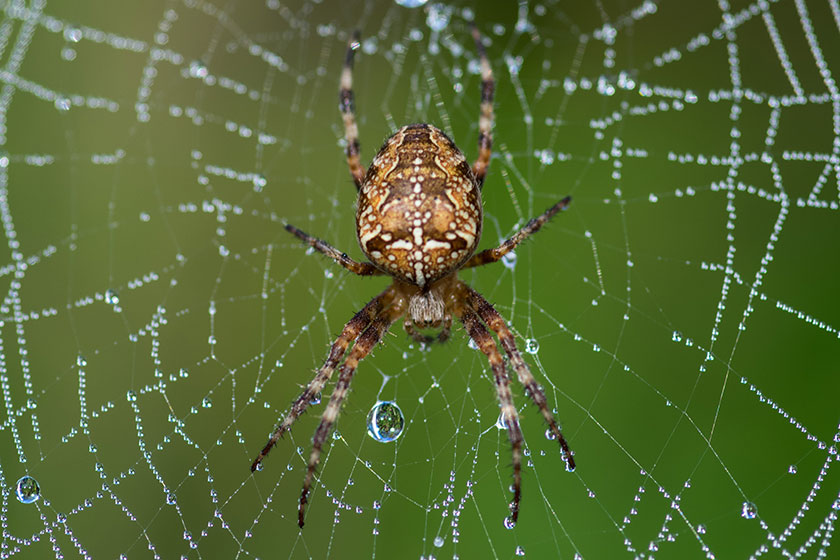
    The above picture was copied from the Natural History Museum, London and shows the full beauty of the web spun by what we in Britain know simply as the garden spider.

  • Knowledge of the Ancients: Pliny the Elder, (23-79CE), on British farming and the Iran oil crisis

    Knowledge of the Ancients as opposed to Wisdom of the Ancients has therefore been shown as different. There is not a neat available definition of Knowledge of the Ancients, nor of Ancient Knowledge, probably because knowledge is self explanatory. Knowledge of the Ancients and Ancient Knowledge, they hang together around Knowledge as opposed to Wisdom, and Ancient Knowledge is the general term for knowledge passed down through generations. Knowledge, generations, these words are all related to human and societal practices over genetic millennia or centuries at least, for it to become knowledge.

    For the purpose of this purely pagan blog this is good, because humans habit in, or inhabit, on an Earth based existence, and more than that, their generations before have gained their knowledge from centuries and millennia on the same region of land, hence the knowledge, because knowledge comes from observing the land, the the majestic rising and setting of Helios overhead. It does not actually matter who goes around who, but we know that it is Earth which spins around Helios, but either way, knowledge is needed for Earth based existence. Ancient Knowledge is Knowledge on and of the land, for survival basically.

    So Knowledge of the Ancients, which is ancient, is by a human and yet it is what is known which is that useful knowledge. It is and it is not paradoxical. It is both. Pliny the Elder was a human, yet it is his astonishing depth and breadth of geography, natural history, minerals and metals, ethnography and societal practices in the lands around the Roman Empire, both within and outside its frontiers which is the knowledge and information. He is no longer in physical, but the knowledge he imparted does remain. And because knowledge is based on fact, or physical and material reality (which this blog does include psychic phenomena because it is factual and real) how can Pliny the Elder connect with British farming and the Iran oil disruption chaos of 2026?

    In Pliny’s day, the first century CE, he would not now know what we are talking about if we said oil disruption due to American aggression in Iran. Pliny in his wide travels, observation, enquiry and knowledge might well have known of Iran, or Iranshahr, as the natives of the region called themselves. He would well have known the Persians, as called by Greeks and Romans, a constant presence and worry to successive Emperors on the eastern borders.

    Pliny the Elder, born in Italy into the new and optomistic Roman Empire and dying in the eruption of Vesuvius 79CE, when in his official capacity and acting with the bravery which men of service possess, going ashore to enquire of the situation and to reassure terrified citizens. The eruption of Vesuvius was way bigger than any human knowledge, plans, intention, ability, or biology, and a man of great cognitive capacity, experience and observation died along with all other biology, as all biology does under superior forces of Earth or Helios.

    In the unfortunate loss of his many other works, the Natural History remains, and contains a vast range of knowledge, knowledge, not wisdom. Pliny in Book XVII, on Aboriculture, states how the tribes of Britain and Gaul use seaweed as fertilizer and how effective this is. Gaul, modern day France, has a very, very long coastline. Britain, with our complicated geography has an even longer coastline, and therefore even more seaweed.

    In 2026, these few months into the year and the global disruption from the unexpected rush to war over no one is quite sure what, other than the USA is going in hard to a completely different geographical and cultural region, and way of ‘doing business,’ several nutshells have stood out loud and clear. Well, to this writer anyway. One is the stated anxiety within the ‘UK’ that British farming will soon be in crisis because it cannot get the fertilizers needed to …. fertilize the farming land of Britain. Was there ever such a strange juxtaposition?

    It is about 2,000 years since Pliny the Elder put together his comprehensive Historia Naturalis, compiling the intricacies of Ancient Knowledge of human and land. The completeness of human on land, survival over seasons and cycles, years and years, going into 100s, going into millennia, it is a wondrous thing. And Pliny certainly thought so.

    In this nutshell of British farming and the oil crisis in Iran, if this were to be explained to someone like Pliny of how it came to be seen as a problem, what would we say? All the centuries through to somewhere around 1815 when trade had opened up and cheaper imports were available, still of the sea kelp and other seaweed to reduce down for that potash and soda ash, to nutrient rich, but cheaper, British farms used what was plentifully available, and from the ancient knowledge of those who were born, lived, and worked the land and shorelines. That is less than 200 years ago.

    Fast forward another 100 years, and the new world of ‘science,’ and the departure from the real facts of life, the logical way of living, and the cheap, synthetic, fake, chemical fertilizers were offered as an alternative. The devil incarnate. To manufacture the phosphorus, potassium and nitrogen based fertilizers, which sound so natural but are not, requires the use of fossil fuels, oil and natural gas. The chemical process is way above this writer’s ken, and a nutshell does not have space to contain the chemical formulas, mining extraction processes, all the heavy equipment used to create those cheap synthetic chemical fertilizers. How it is all extracted, formulated into a synthetic and toxic fertilizer, shipped to the ‘UK’, and poured onto the land must be a very complicated and energy consuming process. But the end point is cheaper and easier. But than what we ask?

    It is a surprise at finding there is any link at all between British farmland and Iran. Under common sense, if the same materials are still in situ around the same coastlines of Britain as Pliny wrote of 2,000 years ago, and which had existed for at least another 7,000 years before after the melting of the last Ice Age, and the Ancient Knowledge holding as true as ever had been, why is there any crisis in Britain?

    Why has leadership in Britain allowed such a divergence? Why can the government not communicate with all coastal County Councils, including Cornwall (who is not devolved and why not?), Wales, Northern Ireland and Scotland to ask who still hold this Ancient Knowledge? There must be a few crofters on the far reaches of Western Isles and Scotland who still live by traditional methods. Why are government officials not hot footing it out to find those people, to ask them, to look to common sense and gratitude in the abundance which lies around us? Why is there not a module inserted into the curriculum of all secondary age pupils on which seaweeds to recognise, how to pick, how to reduce down, how to spread on the land? In the sad facts of State -v- biology in the ‘UK’, the chaos caused in Iran does not have a clearer focus than this. Probably the government has started a billion pound research programme, which will take 10 years, and never deliver (the information, not the seaweed to fertilizer). Meanwhile, ancient cultures retain their link over millennia of old to young, young become old, pass old to young, and if anything this crisis is showing, it is who has the right to opinionate, and who doesn’t.

  • Wisdom of the Ancients: Pliny the Elder (23-79CE) on British farming and the Iran oil crisis.

    What does Wisdom of the Ancients mean? According to the Collins Dictionary, Ancient Wisdom is “pre-Christian knowledge, philosophy and beliefs.” That is two words where the definition encompasses an enormous plethora of combinations and confusions. Some knowledge will have stayed the same, like Helios rises and sets, and that humans need food and water to survive, and other philosophies and beliefs will have morphed into (way too) many since the contrived and cobbling together of the (very many) appropriated images and metaphors to create ‘Christianity’ in the early centuries of the CE.

    Wisdom of the Ancients refers therefore to humans as the focus, it is the wisdom of ‘them.’ Seagulls, earthworms, limpets, snails, lions, beavers, mountain goats, whales and spiders have Wisdom of the Ancients and Moderns, because there is no division in time for them, other than how to deal with the modern human behaviour. There is no Collins Dictionary definition of Wisdom of the Ancients (Collins being a factual and historical publishing house with fine post WWII offices in 13-14 St. James Street, London W1, just as the other real publishers also had houses round about so folks could meet and discuss. Internet screens are not based on anything of any real substance, including this one). When a modern human refers to Wisdom of the Ancients, it is therefore a contrived term, a new-agey kind of catch all for high and divine mystical knowledge derived from any tradition you want it to, regardless of your own culture, ethnicity (genetics of the parents), factual knowledge of those other cultures from having spent time on the ground, or how often you might change your mind and pick and mix another one.

    That short rant over, and having clarified it to itself, this blog post will start again, using the better term of ‘Knowledge of the Ancients.’