Category: A Blog

  • The Tragedy of Halloween: The Pumpkin

    Yesterday being a Saturday and not blowing a hooley (northern, Scottish, Irish term for very stormy), not like last weekend where Storm Boelo wrecked havoc to power lines, beach defences, roads, rail, and many of the horrible and hideous Halloween decorations already put up, northern towns were out on the night’s streets. This blog was in Hexham where a funfair was seen, lights and music and rides all safe in the dark, clear, calm and pleasantly cold evening. Little children and big adults were all dressed up as spooky, macabre, walking dead, victim of some kind of apparent sacrifice so bloodied (fake) were the costumes, and presumably fake police tape stretched over doorways to alert to the scene of some horrible crime, the witch, and the spider. Obviously this blog does not partake of such things but is observing Alfablot gathering time with the ancestors over these few days, in the inexplicable equation of the Solar cycle of Earth as it spins in space within its allotted orbit, as life continues its linear trajectory of year on year ageing to passing. n passing the state of affairs these days. It also noticed more than a few costumes of the pumpkin.

    In Glasgow fireworks were used as weapons in the febrile relations between now not just the Protestants and Catholics but many other groupings. In Newcastle where there is never the need for a reason to party, the partying was fun and the alcohol flowing. But all over the northern Halloween activity the pumpkin was a feature this year in outfit, not just in the grinning lit face on doorsteps and in windows and shops but as the human pumpkin, walking the streets, drink in adult hand and hand in parent’s if a child pumpkin.

    Now, given the pumpkin’s appearance (through clever merchandising) as a costume, and the real object piled high on supermarket shelves for the couple of weeks before the Big Day of October 31st, it could be stated that the pumpkin is the new turkey. With many ‘UK’ households moving away from traditional fayre and opting for the Xmas takeaway pizza instead, the rise of the vegan religion, and just too much digital entertainment to catch up on, the turkey is on the decline. The pumpkin however, has been estimated by the National Farmers Union to be produced as many as 15 million.

    Pumpkins do not vote for Halloween. This statement is unequivocaly true. It would not be logical for a member of the Cucurbita family, even a cultivated member, to wish to be born from a seed, grow, be picked, and end up as a spectacle for a few days of human madness, sitting grinning inanely as the humans party, and then be chucked in the bin to rot.

    Alone of the Squashes, Pumpkins, Gourds, the wider genetic network of the various shapes and sizes and colours, it is the round orange pumpkin of the ‘UK’ Halloween which has suffered this unfortunate tangle with entertainment. From their origin on the landmass now known as America, north and South, ‘our’ pumpkin is indigenous to Mexico and north America, for many thousands of years cultivated as part of food and society, and within the range of crops and cycles which indigenous peoples know is survival. It was Christopher Columbus in 1492 who collected pumpkin seeds and transplanted indigenous species in Europe. Whether he was Italian (which Italy did not exist as Italy then) or Spanish is not relevant to the pumpkin. The fact was they were transported across the Atlantic to end up as the awful spectacle of Halloween 2026, followed by the discarding after the party is over and the rot in landfill.

    In general figures, about 25 million pumpkins are bought in the ‘UK’ for its Halloween horrors. 18,000 tonnes of edible pumpkin (which sustained the indigenous peoples over 7 or 8 or 9 or 10,000 years) are chucked in the ‘UK’ after the horror is over. And if a storm interferes with the harvest of the wretched beings, many farms and intensive cultivators now have a Plan B of Pumpkin Smashing.

    Pumpkin Smashing has two meanings. One is the act of smashing pumpkins as an act of aggression to do damage to a farmer or organisation. The other is that by humans, adults and children, who wantonly smash pumpkins as an act of fun, but legitimately at a farm event or collectively smash their own pumpkins. The government comes down very heavily on humans acting from stress and desperation who try and protect their society and ancient ways of surviving on the land of Britain. However children are encouraged to smash the food supply in pumpkins, leaving it then to rot, and the humans to have had even more fun after their horrific Halloween nights. It is a strange incongruity in times of apparent cost of living crisis and possible supply chain failure to see the tragic end to these beautiful creatures, their flesh lasting in soups and casseroles for weeks and weeks for those of us who still cook and eat real food, the colours of orange and russet autumn colours and shapes all making up one wider and once indigenous family. But this is not something the vegetarians and vegans concern themselves with, for the natural world has been subverted into ‘we love Nature’ or the fate of those caught up in Halloween, the pure entertainment and degradation of those 25 million pumpkins.
  • Rudyard Kipling’s “Sussex”: people and place

    https://www.kiplingsociety.co.uk/poem/poems_sussex

    God gave all men all earth to love,
    But since our hearts are small,
    Ordained for each one spot should prove
    Belovèd over all;
    That, as He watched Creation’s birth,
    So we, in godlike mood,
    May of our love create our earth
    And see that it is good.
    2
    So one shall Baltic pines content,
    As one some Surrey glade,
    Or one the palm-grove’s droned lament
    Before Levuka’s Trade.
    Each to his choice, and I rejoice
    The lot has fallen to me
    In a fair ground—in a fair ground—
    Yea, Sussex by the sea!
    3
    No tender-hearted garden crowns,
    No bosomed woods adorn
    Our blunt, bow-headed, whale-backed Downs,
    But gnarled and writhen thorn—
    Bare slopes where chasing shadows skim,
    And, through the gaps revealed,
    Belt upon belt, the wooded, dim,
    Blue goodness of the Weald.
    4
    Clean of officious fence or hedge,
    Half-wild and wholly tame,
    The wise turf cloaks the white cliff edge
    As when the Romans came.
    What sign of those that fought and died
    At shift of sword and sword?
    The barrow and the camp abide,
    The sunlight and the sward.
    5
    Here leaps ashore the full Sou’west
    All heavy-winged with brine,
    Here lies above the folded crest
    The Channel’s leaden line;
    And here the sea-fogs lap and cling,
    And here, each warning each,
    The sheep-bells and the ship-bells ring
    Along the hidden beach.
    6
    We have no waters to delight
    Our broad and brookless vales—
    Only the dewpond on the height
    Unfed, that never fails—
    Whereby no tattered herbage tells
    Which way the season flies—
    Only our close-bit thyme that smells
    Like dawn in Paradise.
    7
    Here through the strong and shadeless days
    The tinkling silence thrills;
    Or little, lost, Down churches praise
    The Lord who made the hills:
    But here the Old Gods guard their round,
    And, in her secret heart,
    The heathen kingdom Wilfrid found
    Dreams, as she dwells, apart.
    8
    Though all the rest were all my share,
    With equal soul I’d see
    Her nine-and-thirty sisters fair,
    Yet none more fair than she.
    Choose ye your need from Thames to Tweed,
    And I will choose instead
    Such lands as lie ’twixt Rake and Rye,
    Black Down and Beachy Head.
    9
    I will go out against the sun
    Where the rolled scarp retires,
    And the Long Man of Wilmington
    Looks naked toward the shires;
    And east till doubling Rother crawls
    To find the fickle tide,
    By dry and sea-forgotten walls,
    Our ports of stranded pride.
    10
    I will go north about the shaws
    And the deep ghylls that breed
    Huge oaks and old, the which we hold
    No more than Sussex weed;
    Or south where windy Piddinghoe’s
    Begilded dolphin veers
    And red beside wide-bankèd Ouse
    Lie down our Sussex steers.
    11
    So to the land our hearts we give
    Till the sure magic strike,
    And Memory, Use, and Love make live
    Us and our fields alike—
    That deeper than our speech and thought,
    Beyond our reason’s sway,
    Clay of the pit whence we were wrought
    Yearns to its fellow-clay.
    12
    God gives all men all earth to love,
    But since man’s heart is small,
    Ordains for each one spot shall prove
    Beloved over all.
    Each to his choice, and I rejoice
    The lot has fallen to me
    In a fair ground—in a fair ground—
    Yea, Sussex by the sea!

    Rudyard Kipling was born in 1865 in Bombay, British India. Before the modernist de-colonist politically correct anti-patriarchy global citizens jump up in violent anger, in 1865 the place where Rudyard Kipling was born was called Bombay and it was under the governance of the British government, hence British India. Just as Syria was ‘Roman Syria’ from 64 BCE after Pompey had King Antiochus XIII Asiaticus executed (which then was instant and clear), so history of the last few thousand years on the land mass of Asia, middle Asia, the Mediterranean and Europe, to include the British Isles and Eire over the Channel, but not Norseland or Iceland, has been the emergence of societal governance under empires not city states, and the command of one land under another, often ruled from a distinct place a long way away in geographical and cultural terms. Alexander was a long way from the further reaches of his empire, Rome was a long way from its subject states, and so London was far from the far reaches of empire. It was what it was, and this particular blog does not believe in re-incarnation, therefore Rudyard Kipling did not choose to be born in Bombay in 1865.

    Now named back again as Mumbai to native place, by native humans, after the weight of colonial rule has ended, Mumbai directly reinstates the local goddess Mumbadevi, the patron goddess of the Koli fishing folks who lived for a very long time on the islands and estuary where the men would have gone out on the boats and the females gave birth, kept the hearth, knew about food from the land, and all together made up a whole sustainable community with no thought (it can safely be said) about notions of patriarchy or inclusivity and diversity or equality, because all together such communities make up one Whole.

    Rudyard Kipling, born where he was, knew the British Empire from the inside, and also the trauma of being transported from India to England to abuse foster homes and the very, very strict education which boys of the Empire underwent. He was also not part of the actual government, but his father was the Professor of Architectural Sculpture at the Sir J.J. School of Art in now Mumbai. And so Rudyard had a curious combination of artistic genes and the governance of the British Empire, from which his flowing ability brought forth the classic stories and adventures and the walking between worlds of the British Empire’s view of native lands, and the reality for a child who had Indian nannies, and direct physical and linguistic communications so early on, severely contrasted with the harsh first placement in England and the view from that Empire power of what a correct education was, the pressure of a university, the right sort of career, all under the Protestant Christian government of the time.

    Rudyard Kipling has also been the wrong side of modern sensibilities in his use of rhyme. Now, for a long, long, long time anything that needed to be said, or even just expressed, was best done in rhyme. It sits in the brain and it fits in the brain, and can be remembered again and again, but with the general turn against all things British establishment, and against men in general and especially men associated with past Empire, the structured rhyming poetry is definitely a thing of the past.

    However, Rudyard’s childhood and then return to India as a journalist and a part of Indian cultural life, not as a governor or top down power structure, was fully between two worlds, and fully part of both at the same time, as far as one can be. And whether you are in a place through no choice or choice, the place still has the long history of natives and their gods and goddesses. This blog is written from 54′-56’N in Britannia, the name generously given by the Romans to the personification of the warrior goddess, so not any different to Mumbai being returned to the native goddess. Both names happen to be goddesses, which means nothing. All pantheons are made up of the full spectrum of life, and without both gods and goddesses where would anything be?

    In Sussex, the English country on the far south of the landmass, Rudyard and his wife bought Bateman’s, and where he lived until his passing in 1936. Just as his life in India was not all good/bad but conveys the complexity within governed geographies and how there is within also much syncretism, communication, understanding, exchanges, so his life in England also. While continuing within political circles, in writing, organisations, political philosophy of events of the day, he wrote “Sussex”. And in “Sussex”, it is very clearly said that in England also, the Christian British Empire has suppressed the native gods and goddesses, and those (of us) who worship them. Ecclesiastical law prevents any archaeology of church sites, but underneath lies the practices of the land, often a well of clear fresh water, on a particular landscape location, in a regional network of others, and under the pantheon of gods who care and guide and protect. It is said that Rudyard communicated with the little people in his garden, who to those of us who live by the olde ways are real people, who do give poems to be conveyed, who do wish for their land back and their humans to be living as humans once did, before the virus of the modern era went mad.

    “Sussex” as everyone who knows Sussex well, is actually West Sussex and East Sussex, and Rudyard was in East Sussex. Place speaks and creates and directs and draws circles and links humans in apparently impossible ways, and did once provide the 95% identity of biological humans, merged with geographical. As the British Empire is no longer, and itself has been renamed into the Common-wealth (let’s not go into those two words) which itself is falling apart, and as the government structures of the ‘UK’ government itself is falling apart, still there are many natives in England, Cornwall, Wales, Lancashire, Yorkshire, Manx, Eire, Cumbria, Northumberland, The Borders of Olde, Galloway, Pictland and Caledonia who love their place because their place loves them. It is very sad that those who are natives and a place in these places are now called supremacist, extremist, and all the other names because there are also now many thousands, millions even, whose “place”, “my country” is nowhere in Britannia or Eire but all around the Earth as it spins in space, held in place by Sol and gravity. It is a very sad thing indeed for us natives who believe all humans have a natural right to the “place” can only see this reality in incomers to Britain who speak of “in my country” meaning a land very far from Britain. This blog, despite no doubt being seen as an ignorant xenophobe by lefties, is exactly the opposite, and the pleasure is inestimable when speaking with natives of other lands, even when they live in Britain, of the love for “our place”. Alas it is just one thing that the modern State obscures, that to love “a place” and to speak of our love, is actually the antidote to modern tensions, not the cause.

  • Esther Rantzen R.I.P.

    The timing could not be more stark in the passing of Esther Rantzen from a terminal illness, and the killing of the Assisted Dying Bill by Parliament and the House of Lords. An organism needs food and water to survive, a network of similar, shelter, and a necessary environment for its specifies, whether woodland or moorland or seashore or marsh or high rocky mountain. A government to govern maintains the laws, and the laws are about governance and exist in an environment of jurisprudence. The small Parliaments of Jersey and the Isle of Man know how to biologically make and live their laws, with jurisprudence linking daily reality with a legal entity. Never did the House of Lords or more recently Parliament invite Esther Rantzen to come and help formulate the process, despite fete-ing her in the other areas of her life. The picking and choosing of ‘UK’ politics takes it apart from the natural world and the cart veers into the ditch.

  • ‘UK’ Parliament kills the Assisted Dying Bill: Now begins its own slow, agonising death.

    The passage through the ‘UK’ Parliament since the June 2025 vote in favour of the well thought out, common sense, logical, pragmatic, biologically aligned, majority public supported Bill to the 11th September 2026 ‘defeat’ in the same Parliament provides a useful snapshot of the State of Constitutional Chaos in the ‘UK’ of the present time.

    June 2025 to September 2026 is one calendar year change, or Solar year with that being the time it takes for Earth (the spinning mass of rock and molten material with a little layer of earth and water along a varied topography on its surface, and what used to be thick ice at the poles, held in place by the gravity of Sol and motion, for Earth moves very fast), and plus one quarter of a Solar year as making three months, so one year of Sol and one quarter year. In the 4.5 billion years of Earth spinning in space, this is not much. So the question is, how does the same Parliament make a different vote in such a short space of time?

    The Private Members Bill of 2025 brought by Kim Leadbeater, a Labour MP, being talked out by the House of Lords in the last Parliamentary session – a purely human construct – was catastrophic enough for the Parliament of the United Kingdom of Great Britain and Northern Ireland. That the HoL took it upon itself to be greater than Parliament creates a constitutional crisis.

    In March 2025 the Tynwald (Parliament of the Isle of Man) passed its Assisted Dying Bill, with the Upper House making a few amendments, as is the role of such a process, sorting them out, and passing the Bill.

    In February 2026 the government in Jersey, the Channel Islands, passed its own Assisted Dying Bill. This blog is interested in governance as a principle and government as the action, so the name of a Parliament is actually irrelevant. It’s the function which is relevant. And in 2026, i.e., within the year of Sol, it had received Royal Assent, and within half a year of Sol.

    Why does such a Bill require Royal Assent?

    Why was the Isle of Man Bill delayed? Because the UK Parliament believed the unwritten elements of protection did not meet the European Convention on Human Rights, under which they must be stated. And in the Isle of Man where life is close to the real facts of life, such detailed statements would likely not be required because under this practical Bill only the logical outcome would happen. And that is a person entering the last stages of a one-way, terminal illness, and themselves not wishing to go through hell or put those around them through hell. The logic is so obvious that in places where governance is functional, such endless adherence to artificial Conventions would never be considered. But the Isle of Man has been put through the hoops. The ‘UK’ Ministry of Justice requires there to be absolutely no coercion, because mainland Britain sees nothing but coercion. On the Isle of Man, life is more practical and people who are in the last period of their life, facing a bad end, are believed. So as yet, no Royal Assent for the Isle of Man.

    And back in the Westminster Parliament, another Private Member’s Bill, from another Labour MP, now Lauren Edwards. The same Bill – exactly the same logical, factual, well worded Bill – was back in Parliament after the House of Lords had taken constitutional matters into their own hands, but this time we have a new Prime Minister. And that same Bill is now killed in the Parliament by the MPs themselves.

    One clear reason was given that the MPs voting against the Bill, killing it, believed those not wishing to face the inevitable bad death only wanted a peaceful passing because there was not enough money given to social care. The curious thing is that the last two Private Members Bills were brought by Labour MPs, yet it is the Labour Party which pumps up the balloon of the State to the point now where everything is about to burst. The Labour Party are in power in the ‘UK’, and the new Prime Minister, rather than taking the opportunity to grasp hold of this matter, of which the majority of the public are in favour, has managed to steer it firmly towards his own agenda of ‘social care’, whatever that means. And when it is boiled down, it means nothing at all.

    The violent hatred of groups like Care not Killing who believe the Assisted Dying Bill would have continued through those nearing a bad end and started on disabled people, whatever that means, elderly people, whatever that means, and generally become a force for bad in society, are jubilant no doubt. The House of Lords must be happy it showed how much power it has over Parliament, and those who vocalised in Parliament against the latest Private Members Bill have stated that ‘when social care is properly financed then they might think about the Assisted Dying Bill,’ but this is all hostage to the wrong thing.

    End of life is end of life, the biology shows it, and on the planet Earth, circling around Sol every 365 days give or take a few seconds, and in that time itself spinning 365 times to give night and day, nothing has changed for human reality. We are born, we live, we die. This blog being a polytheist blog writes from the perspective of body and spirit and gods, but for the body, we die. The life force leaves the body.

    The giant tortoise is the longest living land animal, and one giant tortoise living on Saint Helena is believed to be about 190 years old. Some sea creatures which are living but not active lives of waking and sleeping and moving around a lot, like coral for example, can be very, very old, but they will still die sometime. There is no medical systems, no drug companies, no World Health Organisation, and no supermarkets in the natural world. Everything is living and dying into the natural world, both eating each other and enabling each other in the beautiful network which is Life itself. And now within the ‘UK’ constitutional powers, Jersey inhabitants can partake of natural processes, and Royal Consent confirms the validity of both the legal process and the practice. It cannot be long before the Isle of Man follows the logical function of government.

    Alas for the Westminster Parliament and the House of Lords, and all those organisations and vocal disabled people who believed they ‘would be killed’, the chaotic last Solar year and a quarter under which human biology has not changed, the clarity of those wishing to avoid a bad and inevitable end has not changed, the bones and muscles and neural networks of government have lost their connection. Biology creates an entity, and societal cohesion of bees and ants and seagulls and beavers is not in any written statute or a centralised building, but exists as much a part of existence as the biology itself. It can be seen as natural laws, because laws of any sort regulate the subject matter. The biology is indivisible from the societal network, and a societal network is underpinned by laws.

    Such is history in western Europe, we are where we are, but if the biological facts of life remain the same, a human is born and it dies, but it’s societal network is dictated by a structure which is neither part of the real natural world, and now correlate neither with the citizen body nor the real facts of existence, governed by Sol, Helios, an ghrian, then what happens from here as Parliament begins its slow and public demise.

  • The Bayeux Tapestry: The Year of Entente Cordiale?

    On Thursday the 3rd September 2026, BBC Radio 4 had Norman Day to mark (or celebrate the return of) the Bayeux Tapestry to England, to the British Museum. The British Museum is free general entry to the zillions of tourists and visitors each year after Tony Blair generosity in 2001 to permanent collections in the ‘UK’, but costs £33 for a standard adult ticket to see the Tapestry.

    The gathering at the British Museum on Wednesday 2nd September of King Charles and Queen Camilla, Prime Minister Andy Burnham and his wife Marie-France, and President Macron and his wife Brigitte, BM Director Nicholas Cullinan, and Chair of the Trustees George Osborne was described in press and Radio 4 as an Entente Cordiale. As this blog understood it, such a term was a sort of non legal entity, required a high level gathering, and referred to something constitutional past or present. And that the agreement was Cordiale signifies that beneath the smiles and bonhomie it is quite a complicated thing altogether.

    For interest, this blog looked up Entente Cordiale and from Britannica this is cut and pasted (this blog does not believe in plagiarism in any shape or form) https://www.britannica.com/event/Entente-Cordiale

    Entente Cordiale, (April 8, 1904), Anglo-French agreement that, by settling a number of controversial matters, ended antagonisms between Great Britain and France and paved the way for their diplomatic cooperation against German pressures in the decade preceding World War I (1914–18). The agreement in no sense created an alliance and did not entangle Great Britain with a French commitment to Russia (1894).

    The Entente Cordiale was the culmination of the policy of Théophile Delcassé, France’s foreign minister from 1898, who believed that a Franco-British understanding would give France some security against any German system of alliances in western Europe. Credit for the success of the negotiation belongs chiefly to Paul Cambon, France’s ambassador in London, and to the British foreign secretary Lord Lansdowne; but the pro-French inclination of the British sovereign, Edward VII, was a contributory factor.

    The most important feature of the agreement was that it granted freedom of action to Great Britain in Egypt and to France in Morocco (with the proviso that France’s eventual dispositions for Morocco include reasonable allowance for Spain’s interests there). At the same time, Great Britain ceded the Los Islands (off French Guinea) to France, defined the frontier of Nigeria in France’s favour, and agreed to French control of the upper Gambia valley, while France renounced its exclusive right to certain fisheries off Newfoundland. Furthermore, French and British zones of influence in Siam (Thailand) were outlined, with the eastern territories, adjacent to French Indochina, becoming a French zone, and the western, adjacent to Burmese Tenasserim, a British zone; arrangements were also made to allay the rivalry between British and French colonists in the New Hebrides.

    By the Entente Cordiale both powers reduced the virtual isolation into which they had withdrawn—France involuntarily, Great Britain complacently—while they had eyed each other over African affairs: Great Britain had had no ally but Japan (1902), useless if war should break out in European waters; France had had none but Russia, soon to be discredited in the Russo-Japanese War of 1904–05. The agreement was consequently upsetting to Germany, whose policy had long been to rely on Franco-British antagonism. A German attempt to check the French in Morocco in 1905 (the Tangier Incident, or First Moroccan Crisis), and thus upset the Entente, served only to strengthen it. Military discussions between the French and the British general staffs were soon initiated. Franco-British solidarity was confirmed at the Algeciras Conference (1906) and reconfirmed in the Second Moroccan Crisis (1911). (End of cut and paste from Britannica)

    That’s quite a complicated twentieth century CE in western Europe and Mediterranean Arab lands and the west of Africa, and Newfoundland, Thailand, Burma, French Indochina, and the New Hebrides (now Vanuatu, but either way a long way from the Hebridean Islands off west Scotland).

    In 2026, the high level gathering this side of the Channel was in the British Museum, which did not exist in 1066. Neither did the ‘UK’ and neither did France as such. Philip I was King of the Franks, and his kingdom was really only territory around Paris, with the powerful dukes and counts as lords, rulers, in their own right on the domains from the Channel to the Med. And William was Duke of Normandy. France holds a more unity than the ‘UK’, with Clovis I holding a unity of Frankish tribes (tribes, the ancient grouping of humans and which this blog takes a great interest) way back c.500 CE, but in 1066 there was no France as we know it today either. In 1066 there was no Westminster Parliament.

    The tapestry did exist somewhere in the decades after 1066 ‘and All That’, and 1066 and All That is an actual book of 1930 by Julian Yeatman and Walter Sellar, two students at Oxford 1916-1919. And Prime Minister Andy Burnham at the Entente Cordiale of the BM 2026 joked of the new leader from the north coming south for the crown. Meanwhile even larger boats crossed the Channel carrying illegal migrants into England. Who exactly rules or governs Britain? Where do historical lines draw today? Is it time for a sensible discussion about 1066 and All That?

  • The Spider: An Inspiration for Humankind

    Autumn in Britain brings the beautiful sight of the spider again. They are here all year of course, but this time of year is the best. They are busy.

    The spider has to do everything itself and although that is true of all the natural world (and is true of humans too when their electricity supply fails, as it will do) the spiders are more amazing than most other species. This is because they can spin their webs from internal supplies, and over and over again. They are like little factories, taking in raw material in the form of food, keeping it in a liquid silk protein ready to push out through its spinnerets into those fine strands of flexible silk. Those flexible strands of silk are beautiful in autumn sunlight, or when frost will be in the early morning when Sol rises low in the sky as we head into the dark months of the northern hemisphere. The hemisphere is because Earth is a spinning ball of rock and the combination of gravity and speed pulls matter into a circle-ish.

    This blog, because it has always been fascinated by spiders was looking at some regional information to remind itself of the astonishing miracle which is life. Some would disagree, some believe spiders should be killed because they are terrifying. Not this blog, oh no.

    https://cdn.buglife.org.uk/2021/01/Scottish-Spiders-Guide-2-Introduction-to-Families.pdf

    https://www.nwt.org.uk/wildlife-explorer/invertebrates/spiders

    Information on spiders, according to species

    Pliny the Elder wrote about spiders in Book XI, Insects and zoology. In Chpt. XXVIII (28 to us modern humans) he wrote how spiders weave their webs higher when they think it will rain and the rivers rise, also that they reweave the webs in cloudy weather, therefore to see many webs means it will rain. Now this could be similar to British saying that when the cows lie down it will rain. Whether to make sure there is a dry place on the ground, who knows, but those of us out of doors a lot do see this, and often it is true. Doubtless there was some correlation for Pliny, and the desire for modern science to disparage all the superstitions and ignorance of past peoples often forgets that those who spend a lot of time out of doors do actually see things, and still, whereas those who only see the digital screen really see nothing at all of reality.

    Pliny also wrote that people think it is the female that weaves and the male that hunts, and that thus the married pair do equal shares of service. Now, Pliny was writing in the first century CE, so after Emperor Augustus had consolidated the Roman State according to a moralised, patriarchal, strict family morals, for reason of restoring order after the chaotic decades of civil war, but before Vesuvius erupted, in which Pliny the Elder perished, because volcanoes are the natural world and the human does not control the forces of gravity and geology and sun flares from Helios. That Pliny the Elder was writing as he did about the marital arrangements of spiders is not surprising therefore. Feminists would be furious, but probably not many feminists read Pliny the Elder.

    Pliny’s observations, even if not strictly accurate on the marital status of spiders, and certainly not by the standards of the barbarians, which the Romans hated so much because we were so untidy and uncouth, was right overall. The beautiful webs that suddenly adorn the twigs and branches and leafs and doorways at this time of year, and the large house spiders who confidently wander across the room, they are thinking of their habitation arrangements. They care about propagating the next generation of spiders, of whatever family, or tribe we could say.

    The need for food before winter, the need to mate, the desire to mate for both males and females (there is no feminism amongst spiders and no male toxicity or female toxicity, or maybe the occasional spider gone rogue but they would be dealt with quickly by the community) and for that the need to find more food with the requirement for more webs to catch more insects, it is a busy time of year. Even more so when you have to do it all yourself from start to finish.

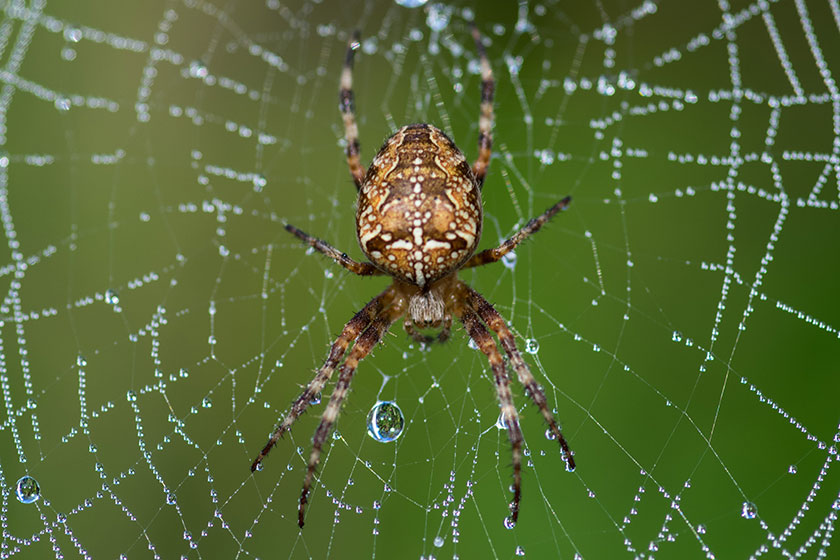
    The above picture was copied from the Natural History Museum, London and shows the full beauty of the web spun by what we in Britain know simply as the garden spider.

  • The 3 Realms of Existence: Space above, the earthling realm, & History

    Life on Earth in this last week in Britain is very strange for the humans. Within the parameter of normality, as defined by what goes out on national airwaves or printed in newspapers, NASA launched the Nancy Grace Roman telescope away from this spinning mass of rock, held in place by Sol in a galaxy vast itself, and which will chart the further reaches of the universe and map 2 billion stars (if all goes to plan), on the surface of Earth the politics of earthlings is very complicated in northern Europe and America, while around the mass of rock volcanoes erupt, Central Asia is already forgotten by the news in the catastrophic floods, and its supply chains from global ports are becoming shaky, and on Thursday 3rd September BBC Radio 4 had Norman Day, to celebrate the Bayeux Tapestry in London.

    The question is, where is the reality? This is not a philosophical question. Nor is it a metaphysical or New Age nebulous experiential search for the higher vibrations of existence not apparent to us mere earthlings. It is a question on continuum, and that is physical, because all life on Earth is contained within the physical realm. And reality does mean continuity of a certain length of time, and to exist for a certain length of time must mean the pre-requisites for that to happen. What does that mean? Well, as this is not a metaphysical, New Age, mystical, nebulous blog but a logical, factual, scientifically proven blog, continuity means extendable on the horizontal span of life.

    Now, the Norman Day on BBC Radio 4 did speak much history, and did interview some school children seeing the Bayeux Tapestry for the first time. Never however, did the present day get equated with the eleventh century CE. Was it real? Yes, logically it was, not only because the Tapestry was created, but much evidence besides does still exist to show that human society existed in northern Europe and Britain and Norse lands about 1,000 years ago. Nothing however was equated of today to then, only a modern interpretation of entente cordiale between the French President, the ‘UK’ government, and the King (that was not the intention of the weavers back then), the usual stuff about how unfair it was to not have women in the Tapestry (evidence of the Patriarchy), and the past behaviour of humans in ransacking and pillaging and crushing the peaceful natives. The clear inference is that all is fine today, more than fine in fact. And nothing is said about the reality of space travel, that the bubble of knowledge, billions of stars and extraordinary detail on far flung space dust has no physical relevance to life for the mere earthling. Nobody could live out there, no society could maintain itself, and if the batteries went flat, the spaceship with the telescope would be going nowhere.

    So where is reality in 2026 in Britain? Does it form a continuum of historical reality, or has that been truncated by the mutation of post war politics? Does it await the higher vibrations of freedom from mortal life, into the range and realm of ever increasing scientific data?

  • The UK Prison Crisis: The tail is wagging the dog

    Historically prisons were very small in Britain, built of stone, often tall narrowish buildings, with small windows, and of course a very big, heavy, key.

    https://www.northeastmuseums.org.uk/hexhamoldgaol/about

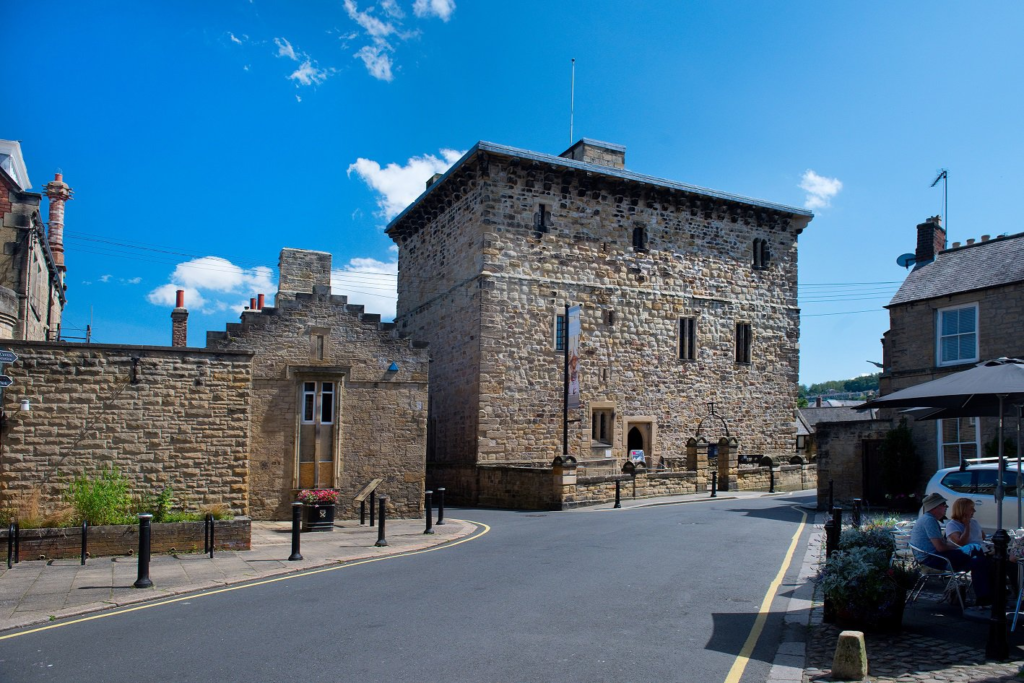
    Hexham Old Gaol is the earliest recorded purpose-built prison in England. It was ordered in July 1330 by William Melton, Archbishop of York, who sent a letter to Thomas Fox, Receiver of Hexham, demanding a gaol where his prisoners could be securely guarded. 

    The archbishop ruled over Hexhamshire, and the construction of the Gaol was a symbol of his great wealth and power. Any fines from offences committed in the area were paid to the archbishop, so it made sense to open his own gaol as a way of making money and controlling the people who lived and worked on his land. 

    Prisons up until this point had normally been part of castle buildings or were in buildings that had been adapted from their original use. 

    The Gaol was completed in January 1333, made from the stone of Corbridge Roman Fort, located just three miles away. 

    It was fitted with torture and punishment devices such as manacles and fetters. Prisoners, depending on their status and the seriousness of their crimes, were held on three floors. The dungeon was a miserable place for the poorest and most hardened of criminals. It was dirty, smelly and overcrowded. In contrast, the first floor was a much more pleasant experience for wealthy prisoners. 

    The Gaolers lodgings were on the top floor. The first Gaoler of the prison was John de Cawood, who was employed in 1332. He was paid 2d and his job was to oversee the prisoners. When they arrived, he would search them, put them in chains and escort them to their living quarters. 

    Gaolers were expected to earn more money by charging the prisoners additional fees: 

    • Admission fee – 4d
    • Restraints such as chains or iron – 1d
    • Bedding, made up of a straw mattress, pillow and cover – 1d
    • Shoes – 1/2d 
    • Fuel for fire – 1d

    It’s likely that wealthier prisoners bribed the Gaoler for extra privileges, such as, better food, better bedding, access to the Market Place to beg for alms, and to be able to attend church. 

    The Gaoler managed the prisoners’ work. Prisoners were expected to contribute to the running of the Gaol, carrying out tasks such as cleaning toilets and collecting urine for selling to the local tanning industry. 

    The Gaolers were expected to maintain law and order but that was a very difficult job when prisoners were allowed to gamble, often getting into arguments and attacking each other, and women and children were not segregated from men. 

    Prisoners were not regularly cleaning themselves or their clothes, so lice was a major problem. Typhus, also commonly known as ‘gaol-fever’, was a bacterial infection spread by fleas and lice, and was rife throughout the Gaol. It caused rashes, fevers and chills. If left untreated it was fatal. Prisoners would fall into a coma and die. 

    The Gaol was infected several times by the plague, a disease spread by the permanent presence of rats. 

    https://www.northeastmuseums.org.uk/hexhamoldgaol/about

    The above link is copied again, because the brief history of Hexham Old Gaol is copied straight from the website.

    This blog has visited and spent a very informative morning, and remarkable it is in how much societal function is contained within the stone building. The stones from nearby Corbridge Roman Fort, active with Romans suppressing us natives around 1,000 years ago. Stone lasts a very long time, and the Earth on which we all spin is 4.5 billion years old. The Earth has orbited Sol all that time, and is likely to last a while longer.

    The prisons in castles were even tougher, harsher, and had smaller or no windows and the prisoners were more likely than not never to reappear. When Kings and Queens ruled Britain it was just the King and their Army, and the castle represented the immediate situation. Berwick upon Tweed Castle in the 1200s, 1300s, 1400s was taken by English, Scottish, English, Scottish, the attacks went one way then the other, with much loss of life every time. Carlisle Castle from 1092 as the northernmost stronghold of the Norman powers coming up north over the lands of Britain were besieged 7 times to 1461, and the Scots showed no mercies. No delivery of pizzas, no showers, no water at all at times, all in a fairly wet and chilly climate during the long winter months.

    Hexham Old Gaol, and the word Gaol looks far more like a prison than the modern jail, as the property of the Archbishop of York does of course carry our strange history in Britain of the parallel power of the Church, and 1330 was before it got even more complicated with the Protestant movement over Northern Europe and Henry VIII’s Church of England. But never mind, for the purposes of this blog the Archbishop of York in 1330, William Melton, represented the totality, like a miniature State all of his own. His power did come from the Church institution behind him, but up in York and his empire over Hexhamshire, he was in charge, and the parameters were clear. His prison fitted those parameters in location and numbers of people being held there. No doubt there would be busier times and emptier times, and because he was in charge, there would be ways of dealing with just too many prisoners to fit in, and no legal system to appeal to.

    This blog being very interested in societal arrangements of the humans does see the tribes and natives groups as the healthiest and happiest because, like a JD Wetherspoon pub, no one wants to be chucked out. In tribes and native groupings, even if in urban modern cities, everyone has a role, a function required of them, and even if infirm or very elderly, there is enough to go around because the others are all fully occupied. However, that is not the modern ‘UK’ of 2026.

    The fact of the prison crisis in the ‘UK’, with the many other crises, but the prison one is uppermost in the news at the present time, a printed newspaper jumped out from a shop shelf, of 10,487 foreign nationals in ‘UK’ prisons. The cost of ‘housing’ if it can be called that, the foreign nationals is c.£630million.

    This seems an extraordinary situation. It is only a few hundred years ago compared to, say, human society after the last Ice Age, and 50 years after Porridge showed on BBC TV. This comedy, and it was very funny, was itself a part of society, and a lot of unhappiness, and some lives turned around, and some pretty brutal incidents never known to the outside would have happened, but society itself was stable enough, and balanced enough in the equation of citizens outside and citizens inside. Just like Yes Minister was very funny, but politics basically worked, and Little Britain was very, very funny, and before the characters became real life which is now not funny at all.

    It occurred to this blog in seeing such figures, and that foreign nationals form about 10% of the total prison population, that a quick solution could be arranged, and one which could well gain the majority approval of the population. That there is no measurable citizen statistics now, and that politics has apparently disappeared from any functional stance, this is just one opinion amongst many, but it is a logical suggestion.

    That the lefty British legal system can hold up a deportation on many grounds, and that a foreign country can refuse to take their criminal back, and that it has been so easy to commit a crime in the first place over the last few decades, what if James McEwen, the CEO of His Majesty’s Prison Service launched a kind of coup equivalent to a rival power in the complicated Roman Empire, where it was power and action, and the disaster of Athenian democracy long put aside.

    If James McEwen just acted, took control of the Prisons Service as if it were a separate entity, just as the Archbishop of York could do in 1330, and sent a decree to every prison holding a foreign national. If it said you have a choice, we fly you back in one week’s time, put you on the runway, take off, and just leave you there and bye bye, or, we put you to death in one week, what would happen?

    Well, what would happen is exactly that, because that’s how systems used to work when there was no expansion possible, or no extra money to keep ‘housing’ a prison population in overcrowded gaols, or jails. And it’s how many countries in the C21 CE operate today because why would scant resources be used for such an intractable situation? And that many of the 10,500 prisoners are from eastern Europe and Eire, relocating would not cost so very much.

    With the swell of opinion and desperate need to get out of traumatic medical endings showing in the Assisted Dying Bill, which should have gone through Parliament and now has to be publicly manoeuvred through the constitutional crisis, and the whole issue of maternity become a medical crisis the other end of the lifespan, how many people in a referendum (as is required under a democracy) is it time to relook at the issue of capital punishment? The argument comes straight out, of what happens in cases of wrongful conviction, and that is those who give a reasoned opinion. The lefty caring people believe in rehabilitating and that a flat and a good job and endless psychological research interventions will create a well rounded citizen (with no need for any ID card though), however, if James McEwen added to his list all those prisoners who have killed a police officer were going to face capital punishment in one week, has the time come in chaotic Britain that the logical solution is now no longer to be found in political parties?

  • Quit while you are ahead: The Commonwealth Games, send a robot instead?

    This title mixes up various phrases and facts. To quit while you are ahead means that things are going well, very well, and to continue might risk things going wrong and you lose the benefits of what you have gained. To quit while you are ahead is not used in sport, not at all. It is the opposite of sports competition because all sports competition is about winning, or coming as near as possible to winning.

    The Commonwealth Games 2026 has just finished in Glasgow, on the 2nd August, and since then has been the European Athletics Championships the 10-18th August held in Birmingham.

    And now today, unbelievably to us cavemen, is news of the Chinese World Humanoid Robot Games. As this is the Second Chinese World Humanoid Robot Games there would have been a First, but a year ago is so long ago in world events. It did stir the memory of something a year ago, but back then it was quirky and something teccie, and as the Chinese are very clever then it is just an extension of their work capabilities and application of political, economic and human work. This year however, it is both more prominent in the news, and comes at a time of so soon after Glasgow and Birmingham.

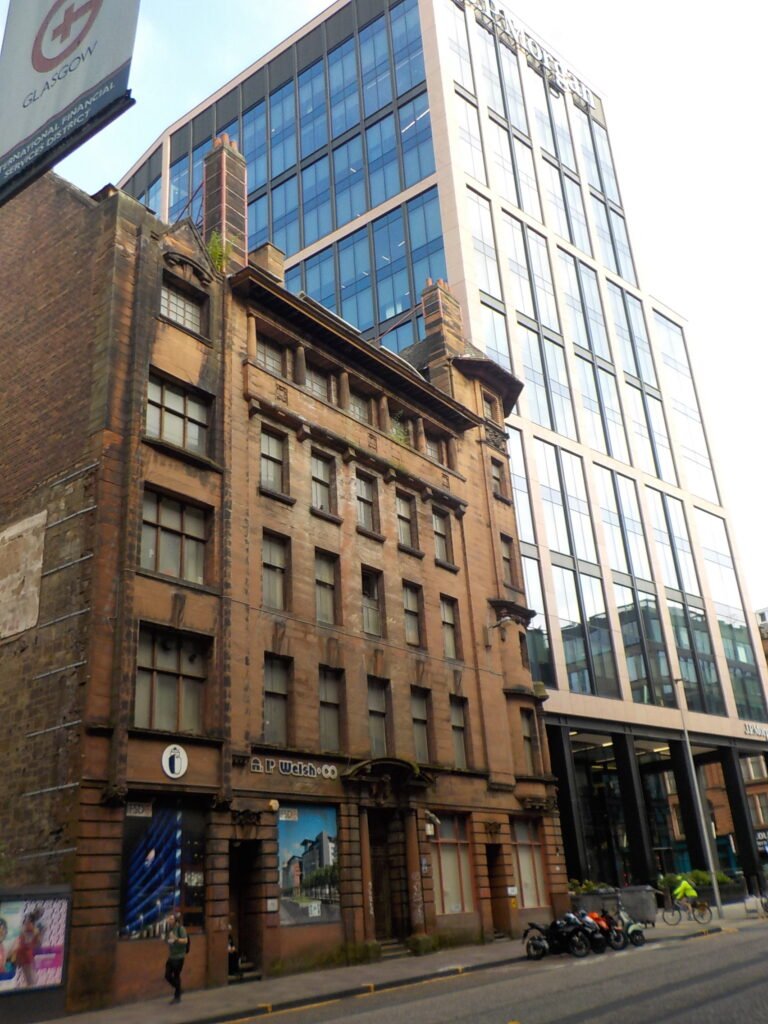
    Glasgow (picture taken by this blog) was termed “the second city of the British Empire” during the boom years of 19th and early 20th century. It is now falling down, and burning down. The weather during the recent Games was first really, really hot and humid, the like of which has never been experienced up here before, and which suited the athletes with melanin in their skin from hot and humid countries, but not the pale northerners, and then had some more usual cool, windy and very wet days. The cool wet days were a shock for those athletes from hot counties who can become very unwell in sudden cold and wet and get cramp or worse injuries, also chills and flu.

    Modern day Glasgow, (picture taken by this blog) shows the juxtaposition of recent historical fortunes. Recent because the last few 100 years of fortunes made in the British Empire (with a lot of hard work going on in logistics and production as well as the problematic issue of humans transported across the Atlantic) was also the period of substantial stone buildings, sandstone or granite, with craftsmanship, knowledge, structural solidity, all without modern tech or cranes, such as the above photo. Next to this sandstone building, in Robertson Street, is the very modern JP Morgan building, and this was constructed when modern tech and digital resources clearly make a very different kind of building, all shiny and modern and much, much taller than the previous tall buildings.

    Glasgow hosted the 2026 Commonwealth Games, after stepping in to rescue the situation. Somewhere in the air has been the question hanging that a peak is reached. No one on an 1,500m elite race on the world athletics track would consider coming into the final bend, 5m ahead of the nearest behind and think, ‘Sod it, I can’t be bothered to finish this,’ and just slope off the track and lie down in boredom. Not at all, it’s just not what athletes are wired for.

    However, in this moment when the next Commonwealth Games, 4 years ahead, in Gujarat 2030 is being given a big fanfare, already, and the plans being laid for a spectacular Games, is this a moment where humanoids would be advised to pause? Glasgow hosted the Commonwealth Games in 2014, New Delhi in 2010, and now here we are with Glasgow and India very close again. The links over so many millennia with Indo-Europeans are fascinating and many cultural and linguistics basis exists, playing chess for just one, and despite the chaos created by British empire dividing up ancient tribal and ethnic regions, there is a real bond of communication and practices between India and Britain. And from that, this is an ideal moment just to pause on this matter of the Commonwealth Games post 2026.

    The European Athletics in Birmingham, just finished, was just down the road from Stourbridge, a mere 10 miles away, and Stourbridge has just had a major wildfire. Buildings in Glasgow with no money to restore them are burning down or falling down, burning down from dodgy insurance claims, old wiring, or thrown away vapes which cause fires. Many places in Scotland, Wales, Cornwall, England, Eire, the Isle of Mann, and the lands known as the Scottish Borders have been and are still burning. The rain that some of us are now fortunate enough to have falling from the sky is the most welcome ever, and many places are not that fortunate. 2027 is forecast to be even hotter, – even hotter – and this is a seriously bad prospect. The year 2030 is nearly here, and who knows what will happen by then, just as the plans are getting into action for a spectacular Games in India.

    This is why news of the Humanoid Robot Games in China could be the solution to this conundrum of what to do with the British Empire, or Commonwealth. Or any large international sports event, or any regional sports event like the European Athletics Championships (what does Europe mean these days?). A humanoid robot does not get sunburnt, or feel the cold, 16 countries have entered this 2026 Humanoid Robot Games which makes a proper international competition, and 2,000 robots participate in so many activities, including real life activity of doing the laundry.

    Is the solution to the increasing questions in international sport actually the robots? 2028 is the next Summer Olympics, due in Los Angeles, and 2030 is the Winter Olympics in the French Alps. From the real human practices of honouring the gods of our region, the appropriation of the honouring of Zeus in Olympia every 4 years has taken a very strange trajectory in its modern appearance. With the exponential heat likely melting all Alpine snow by 2030 and transport failures of trains and planes and all the logistics of mass travel, and the heat of summer events creating a very unfair conditions, is it time to hand over to the humanoid robot, and national teams instead send their avatar robot. In a complete systems failure humans would only compete within their local sports region again anyway, and the medals being won by the humanoids (presumably without any emotion) would still come to the origin nation.

    Not only athletics and the Olympics, but the last year has raised so many questions on international football under FIFA that this solution of substituting humanoid robots could be very useful. To return football to regions of relevant climate, as this blog has argued previously, would be balanced by FIFA overseeing the robot football competitions, and this would likely bring much less financial questions, or the price of tickets, because not many people would be more than £5 or £10 to see such a game.

    Yes, to quit while you are ahead is never done in competitive sport, but if the writing on the wall for international sport showing large over the last year is hearkened to, and there is the robot waiting for the baton, to grasp it and continue its sprint down the track, is this not the time to address these pressing issues?

  • The Archbishop of Canterbury in West Africa to offer Reparative Justice: to whom is this really due?

    At the risk of being extremely wrong to say this in the modern era, but this is a logical blog, not personal, so this must be stated at the outset.

    This short blog wishes to ask a few questions, justifiably it must be said. The new Archbishop of Canterbury has just returned from an historic visit to the Province of West Africa, to visit the Church in Cameroon and Ghana. This Province is not a Roman Province of classical times, like Roman Syria, Roman Egypt, but a more modern day imperial arrangement, that of the Archbishop of Canterbury being head of the worldwide Anglican Church. And worldwide is not exactly worldwide, and certainly not all humans on Earth (this spinning mass of rock in space, held by the gravity of Helios as Light of our world), and not Catholics either, but the Anglican Protestant Church.

    The visit to West Africa was clearly stated to be for reparative justice, and that of course is about the historic slave trade. Over those centuries, British slave merchants moved West African people, mostly men, from the African coast over the Atlantic to the commercial plantations on the landmass the other side (such is geography), there to work in the white man’s plantations which made fortunes large and small for those owners.

    This is not about the rightness or wrongness for the slave peoples to be moved across the ocean, it was desperate sailings and dislocation as never know before. Slaving, as a practice, is as old as the hills, with the ant species Formica Sanguinea as active slave traders for about 14 million years, and showing no signs of abolishing their trade, and all known human societies all over the ancient world, us Celts and Norse up here, the Greeks (they were tough slave owners), the Romans, the islands around Indonesia, all over Africa, the Gauls, the Arabs, all over the Middle East, and the currency up here was easy. Strong Celts were willingly exchanged by warring tribes for Roman wine (the more the merrier), and nothing more was thought of the fate of the new captive going off to foreign parts.

    The Trans Atlantic slavery of course, no doubt about this, was on a different scale altogether. However, in logical terms, it is fair to ask a few questions. One is, native peoples from Eire were also transported to the plantations and worked as slaves, alongside the black skinned West Africans. Because slavery is now a black/white matter, it is only fair to ask if the new Archbishop will also pay a visit to Dublin and make a big apology there too. Probably that will not happen, because it is far too close to home, home being Canterbury in this instance, and British and Irish religious and political matters are way too tricky to draw attention to that.

    The second question to ask is, under the Sale of Goods Act 1750, or equivalent, because there was no Sale of Goods Act 1750, but under the practices that went on, and not just the British, because the French and Portugese were also transporting native Africans across the Atlantic and that has been well forgotten now hasn’t it, the slaves were purchased and not raided. To purchase a slave in the ancient world meant going to the market where slaves were sold, and paying whatever the price was required. Pirates also stole people without paying all around the Mediterranean and then sold them in the regular slave markets, where money would be exchanged, but the markets were a bona fide (Latin for in good faith, genuine, honest legal transaction) business exchange.

    It is a fact that western merchants sailed down the African coast and visited the existing slave markets. The existing slave activities were of African slaves taken by other Africans, they were already slaves, of African peoples. The merchants purchased them in the markets by an honest transaction, and the money stayed with the previous slave owners, the slave was put onto the ship in appalling conditions, and taken over with their new owner to work on the plantations. So this question is, what happened to all the money? Should not the Archbishop of Canterbury be asking for that money back, in return for the reparative justice of saying it was not a good few centuries? It is not really a fair contractual exchange if she makes an apology, but comes back without the money, is it? Otherwise those on the African side of the Atlantic are saying it was a good thing, because they got a lot of money, but a bad thing because the subject of the contract, the slaves themselves, were taken away on slave ships. But it can’t be both if a genuine and honest historic process is being made. Every marketplace ancient and modern has its laws and conditions, and that would have been no different. So in return for the very public visit of the senior person of the Anglican Church, especially when it was not a church matter but a State matter, but if she is representing the State, then all the money which exchanged hands should have been bagged up and returned with her on the plane, or by a separate ship if it was too heavy. Or if it has been spent, then the Deeds to all the property and lifestyle that it funded over the last few centuries.

    The third question is one of true Reparative Justice, and that is within the British Isles, and Norse-lands, and Eire-land, and all of northern Europe, and all of France and Spain and Portugal, but especially Britain and Ireland where so much ‘Church history’ happened, please could we worshippers of the true gods have our properties back? Of course those are often now under a church, because what better way to supress the true beliefs than to put a small or large church building on it, and a churchyard under ecclesiastical law meaning no recovering of the previous sacred site is possible, and no way of acknowledging the many killed in northern Europe for refusing to bow down to the incoming power of monotheist religion.

    If the Archbishop of Canterbury would see fit to make a small reparation to the restoration of the gods to their people, a donation of a church in each county of England, Cornwall, Wales, Scotland, Manx, Eire, and in Norse lands and whoever wanted one in western Europe, can be easily arranged by the ecclesiastical lawyers. As charity does and really should begin at home, this is a request to the new Archbishop of Canterbury to begin the true reparation process and allow restoration of the real alignment of humans on the land again.